
Podcasting did not look like a business when most people first discovered it.
Early shows were messy in a way that now feels almost nostalgic. Conversations drifted. Audio quality was inconsistent. Half the hosts sounded like they were recording beside a washing machine. Nobody cared very much because listeners were there for the feeling of stumbling across people who sounded real.
That atmosphere changed once money entered the industry properly.
Media companies started buying podcast networks for enormous sums, celebrities moved into the space, and advertisers realised audiences were paying far more attention to podcasts than they were to banners or social ads. Suddenly, podcasting stopped being treated like a niche internet hobby.
But growth brought a different problem: The market became crowded very quickly.
New podcasts appear every day. Most disappear almost as fast. A lot of creators assume consistency alone is enough, then realise months later that uploading weekly episodes does not automatically build loyalty.
The podcasts that survive usually understand something more important than production quality.
People return because they like the host. Sometimes it is the pacing of the conversations. Sometimes it is humour, perspective, or the strange sense of familiarity that develops after listening for hours every week. Podcast audiences are not always looking for polished media. Quite often, they are looking for a voice that feels comfortable to spend time with.
Why Host-Read Ads Still Perform Better Than Most Digital Advertising
Most digital advertising struggles with the same issue: people barely notice it anymore.
Banner ads blend into websites. Social feeds move too quickly for sponsored posts to leave much impact. Even video ads are skipped when viewers get the option.
Podcast advertising works differently because the environment is different.
People usually listen while doing something repetitive. Driving home. Walking through the supermarket. Cleaning the house late at night. A host’s voice slowly becomes part of that routine.
That familiarity creates trust, which is why host-read ads still outperform many other forms of online marketing.
When a host recommends something naturally during a conversation, audiences tend to accept it more easily than a polished commercial dropped into a video.
At the same time, listeners notice immediately when creators start forcing sponsorships into every available gap. Some podcasts now sound like long ad reels interrupted occasionally by actual discussion.
Once audiences feel that shift happening, the tone changes quickly.
This becomes especially important in categories like business, finance, technology, or health where credibility matters far more than raw audience size.
Why More Podcasters Are Building Subscription Businesses
Advertising still drives most podcast revenue, but creators have become increasingly aware of how fragile that model can be.
Sponsors cut budgets fast when the economy slows down. Algorithms change without warning. Audience growth stalls unexpectedly. A show that looked financially healthy one year can suddenly struggle the next.
That uncertainty explains why subscription platforms have expanded so aggressively.
Patreon, Spotify subscriptions, and Apple Podcasts gave creators a way to earn recurring income directly from listeners instead of relying completely on advertisers.
What is interesting is how often smaller podcasts outperform larger ones in this area.
A show with fifty thousand loyal listeners can sometimes build a stronger business than a podcast pulling huge download numbers with weak engagement. People are far more willing to pay when they feel personally connected to the creator.
Most subscribers are not paying only for bonus episodes. They are paying because the host has become part of their routine.
Niche Podcasts Are Quietly Becoming Strong Businesses
A lot of people still judge podcasts the same way they judge YouTube channels or social media accounts. Bigger numbers automatically look more impressive.
Inside podcasting, though, scale can be misleading.
Some of the most financially stable shows have relatively small audiences. The difference is that those audiences actually care.
A podcast about startup investing, psychology, independent filmmaking, or storytelling is never going to attract the same numbers as celebrity interviews or mainstream entertainment. That does not mean the business behind it is weak.
In many cases, niche podcasts perform better commercially because the listeners are far more engaged. They buy subscriptions. They support sponsors. They recommend episodes to friends.
That kind of audience loyalty is difficult to manufacture, it is also why personality matters so much in podcasting.
People do not keep returning because a show has perfect audio or expensive production. Most listeners stay because they like the person behind the microphone. They become familiar with the pacing, the tone, even the awkward pauses that make conversations feel less polished and more real.
Storytelling podcasts benefit from this particularly well because audiences become attached to the way stories are delivered, not only the stories themselves. Shows such as The Storytelling Podcast fit naturally into that category because listeners often return for the voice and atmosphere as much as the subject matter.
Audience growth has changed around this idea, too. Many podcasts now grow through short clips on TikTok, Instagram, YouTube, and newsletters long before listeners ever search for the show directly inside Spotify or Apple Podcasts.
Podcasting Has Become a Long-Term Media Business
Podcasting still feels more personal than most traditional media formats, and that is probably why audiences continue spending so much time with it.
Underneath that informality, though, the industry has become far more strategic. Creators think constantly about sponsorship structure, audience retention, monetisation, social clips, and platform growth in ways that barely existed ten years ago.
Even so, the podcasts surviving long term are usually not the ones trying hardest to sound perfect.
Listeners can find information almost anywhere now. What keeps them coming back is familiarity. A voice they recognise. A conversation style they enjoy. A host who feels genuine enough that people are willing to spend an hour listening every week.
Technology will keep changing, and podcast monetisation strategies will evolve with it. But audience growth in podcasting still depends on something surprisingly old-fashioned: whether listeners actually want to hear from you again.
Photo by dlxmedia.hu: https://www.pexels.com/photo/close-up-photo-of-a-rode-microphone-11884525/
Photo by Jeremy Enns: https://www.pexels.com/photo/a-laptop-beside-a-microphone-in-a-studio-5083606/
Photo by CoWomen: https://www.pexels.com/photo/people-in-front-of-black-microphone-2041381/
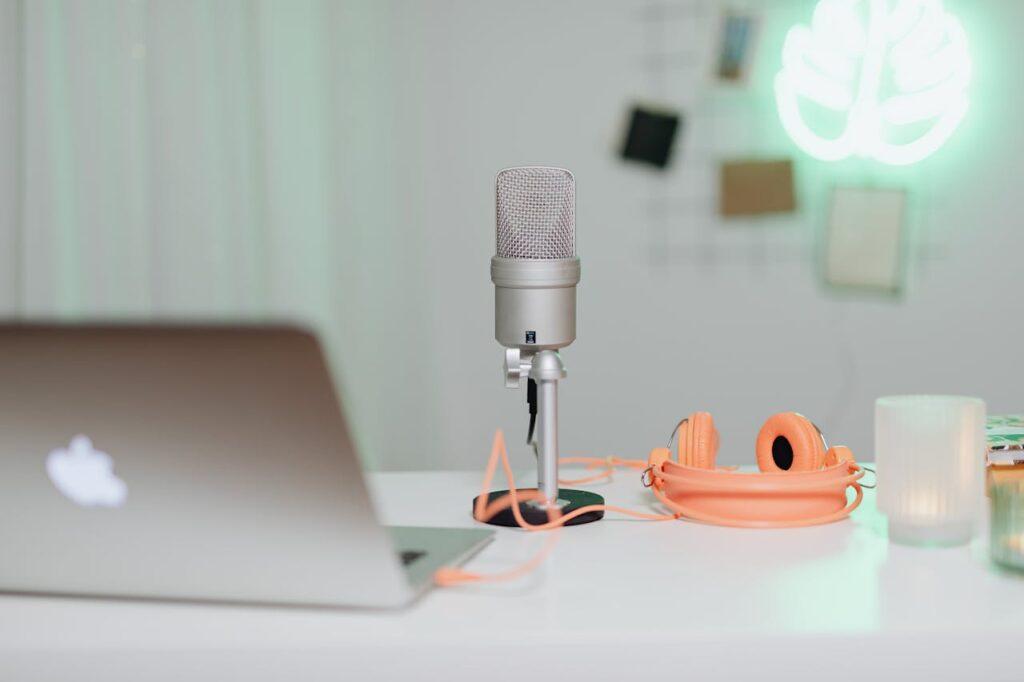
Photo by www.kaboompics.com: https://www.pexels.com/photo/silver-microphone-and-headphone-on-a-white-table-6919947/