
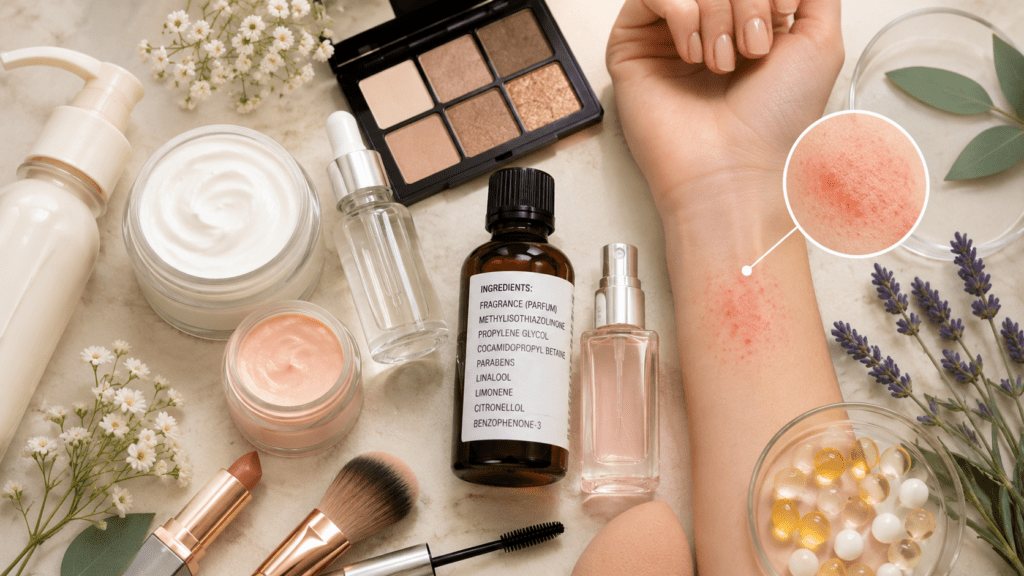
Cosmetics and personal care products are part of daily life for millions of people. From moisturizers and shampoos to makeup and sunscreen, these products are designed to support skin health and enhance appearance. However, some ingredients commonly found in beauty products can trigger allergic reactions, leading to irritation, discomfort, and ongoing skin problems.
Many consumers assume that only harsh chemicals cause cosmetic allergies, but the reality is more complex. Some of the most common allergens include fragrances, preservatives, natural extracts, and even ingredients marketed as gentle or natural. Understanding which cosmetic ingredients are most likely to cause allergic reactions can help consumers make informed purchasing decisions and identify potential triggers more quickly.
Why Cosmetic Allergies Occur
Most cosmetic allergies involve a condition known as allergic contact dermatitis. This occurs when the immune system becomes sensitized to a specific ingredient and reacts when exposed to it again. Symptoms often include redness, itching, swelling, burning, dryness, or a rash at the site of application.
One of the challenges with cosmetic allergies is that reactions may not develop immediately. A person can use the same product for months or even years before developing sensitivity to an ingredient. This delayed response often makes it difficult to identify the source of the problem.
While any ingredient has the potential to cause a reaction, dermatologists consistently identify certain substances as more frequent causes of cosmetic allergies.
The Most Common Cosmetic Allergens
1. Fragrance (Parfum)
Fragrance is widely considered the leading cause of cosmetic-related allergic reactions. A single fragrance blend may contain dozens or even hundreds of chemical compounds, many of which are not individually listed on product labels.
Common fragrance allergens include:
- Limonene
- Linalool
- Eugenol
- Geraniol
- Citronellol
Fragrance ingredients can be found in perfumes, moisturizers, shampoos, conditioners, makeup products, and deodorants. Even products labeled “unscented” may contain fragrance compounds used to mask odors.
2. Preservatives
Preservatives prevent the growth of bacteria, mold, and fungi in cosmetic products. Although they play an important role in product safety, several preservatives are well-known allergens.
Common examples include:
- Methylisothiazolinone (MI)
- Methylchloroisothiazolinone (MCI)
- Quaternium-15
- DMDM Hydantoin
- Diazolidinyl Urea
- Imidazolidinyl Urea
Several of these are classified as formaldehyde-releasing preservatives because they gradually release small amounts of formaldehyde to inhibit microbial growth.
3. Hair Dye Ingredients
Permanent hair dyes are a frequent source of allergic reactions. The ingredient most commonly associated with hair dye allergies is para-phenylenediamine (PPD).
PPD reactions may cause:
- Scalp irritation
- Itching
- Facial swelling
- Redness
- Blistering in severe cases
Individuals who have experienced a reaction to hair dye should seek professional advice before using similar products.
4. Metals
Metal allergies are not limited to jewelry. Trace amounts of certain metals can appear in cosmetic pigments and colorants.
The most common metal allergens include:
- Nickel
- Cobalt
- Chromium
These ingredients may be present in eyeshadows, mineral makeup products, and other color cosmetics.
5. Essential Oils and Botanical Extracts
Natural ingredients are often perceived as safer alternatives to synthetic ingredients, but many plant-derived substances contain compounds that can trigger allergic reactions.
Examples include:
- Tea tree oil
- Lavender oil
- Peppermint oil
- Citrus oils
- Ylang-ylang oil
As essential oils oxidize over time, they may become even more likely to cause skin sensitization.
6. Lanolin
Lanolin is a moisturizing ingredient derived from sheep’s wool. It is frequently used in lip balms, healing ointments, and barrier creams.
Although many people tolerate lanolin without issue, it remains a recognized allergen, particularly among individuals with eczema or compromised skin barriers.
7. Parabens
Parabens are preservatives commonly used to extend the shelf life of cosmetic products. Examples include methylparaben, propylparaben, and butylparaben.
While parabens can cause allergic reactions, they are considered less common allergens than fragrances or isothiazolinone preservatives. Nevertheless, they remain an ingredient category that consumers frequently seek to avoid.
8. Sulfites
Sulfites function as preservatives and antioxidants in certain cosmetic formulations.
They may be found in:
- Hair dyes
- Hair bleaching products
- Self-tanners
- Some skincare products
Although reactions are relatively uncommon, sulfites can trigger allergic contact dermatitis in sensitive individuals.
9. Propylene Glycol
Propylene glycol is used as a humectant, solvent, and texture enhancer in many skincare and cosmetic products.
It can be found in:
- Moisturizers
- Foundations
- Deodorants
- Hair products
While generally well tolerated, propylene glycol is a known cause of both irritation and allergic contact dermatitis in some users.
10. Cocamidopropyl Betaine (CAPB)
Cocamidopropyl betaine is a cleansing agent commonly found in products that create foam.
Typical products include:
- Shampoos
- Body washes
- Facial cleansers
- Bubble baths
Allergic reactions are often linked to manufacturing impurities associated with the ingredient rather than the ingredient itself.
11. Acrylates
Acrylates are increasingly recognized as cosmetic allergens due to the popularity of gel nails, eyelash extensions, and long-lasting beauty products.
They are commonly found in:
- Gel nail systems
- Artificial nails
- Eyelash adhesives
- Long-wear cosmetics
Repeated exposure can lead to significant skin sensitization over time.
12. Rosin (Colophony)
Rosin, also known as colophony, is derived from pine trees and is used in some cosmetics and adhesives.
It may appear in:
- Mascara
- Lip products
- Eyelash adhesives
- Hair removal products
People with known adhesive allergies may be more likely to react to rosin-containing products.
13. Balsam of Peru
Balsam of Peru is a natural resin used as a fragrance ingredient and flavoring agent.
It is often found in:
- Perfumes
- Scented skincare products
- Lip care products
Dermatologists frequently test for Balsam of Peru during patch testing because it can indicate broader fragrance sensitivities.
14. Certain Chemical Sunscreen Filters
Although sunscreen is essential for skin protection, some chemical UV filters can trigger allergic reactions in sensitive individuals.
Examples include:
- Oxybenzone
- Octocrylene
- Benzophenone derivatives
These reactions are relatively uncommon but are well documented in dermatology literature.
How to Reduce Your Risk of Cosmetic Allergies
Reducing the risk of cosmetic allergies starts with understanding ingredient labels. Individuals with sensitive skin or known allergies should carefully review product ingredients before purchase and choose fragrance-free products whenever possible.
Patch testing new products before widespread use can also help identify potential problems. Applying a small amount of product to a discreet area of skin for 24 to 48 hours allows consumers to monitor for signs of irritation before full application.
If symptoms persist or repeatedly occur, consulting a dermatologist can help identify the specific allergen through professional patch testing.
Making Smarter Choices for Healthier Skin
Cosmetic allergies are often caused by ingredients that consumers encounter every day. Fragrances, preservatives, hair dye ingredients, metals, essential oils, lanolin, parabens, sulfites, and several lesser-known compounds all have the potential to trigger allergic reactions in susceptible individuals.
The most effective way to reduce risk is to become familiar with common allergens and learn how to identify them on product labels. With greater awareness, consumers can make informed choices that support both skin health and long-term comfort.
Glossary
Acrylates: Chemicals used in artificial nails, adhesives, and long-wear cosmetics.
Allergen: A substance capable of triggering an allergic reaction.
Allergic Contact Dermatitis: An immune-mediated skin reaction caused by contact with a sensitizing ingredient.
Balsam of Peru: A natural resin commonly used in fragrances and flavorings.
Cocamidopropyl Betaine (CAPB): A foaming agent frequently found in shampoos and cleansers.
Formaldehyde-Releasing Preservatives: Preservatives that slowly release formaldehyde to prevent microbial growth.
Fragrance (Parfum): A blend of scent ingredients used in cosmetic products.
Lanolin: A moisturizing substance derived from sheep’s wool.
Methylisothiazolinone (MI): A preservative associated with allergic contact dermatitis.
Nickel: A metal allergen that may appear as a trace contaminant in cosmetics.
Para-Phenylenediamine (PPD): A hair dye ingredient commonly associated with allergic reactions.
Parabens: Preservatives used to protect products from microbial contamination.
Patch Test: A method used to identify ingredients that may cause allergic reactions.
Propylene Glycol: A cosmetic ingredient used to retain moisture and improve product texture.
Rosin (Colophony): A pine-derived resin used in adhesives and certain cosmetics.
Sulfites: Preservatives and antioxidants used in some cosmetic formulations.