
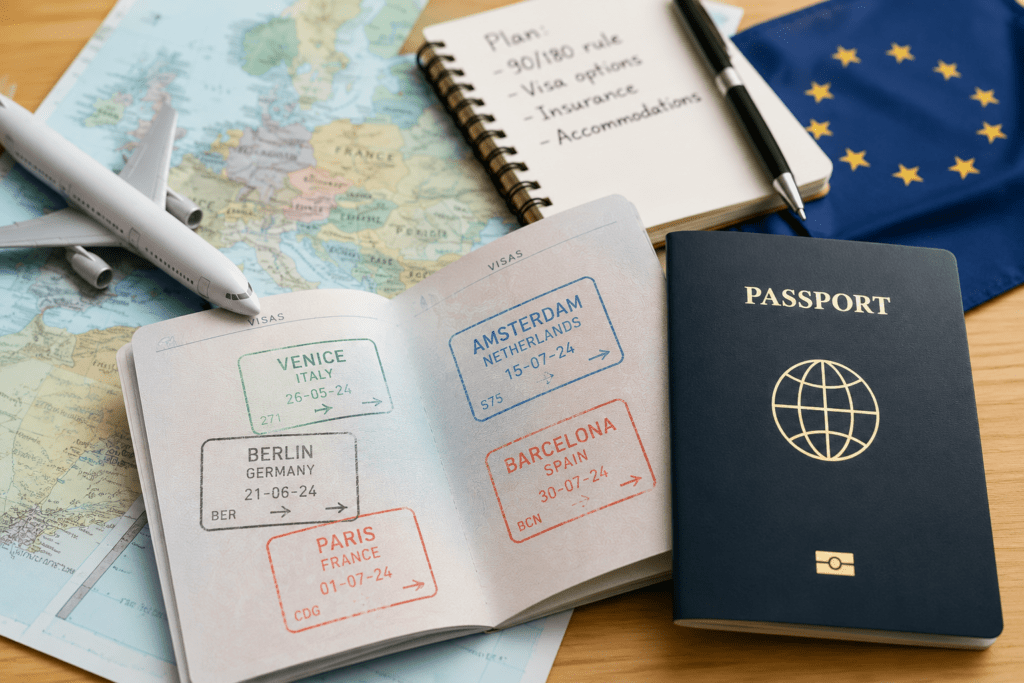
The rise of remote work, digital nomad lifestyles, and long-term international travel has made extended stays abroad more accessible than ever before. Whether someone dreams of spending six months exploring Europe, working remotely from Spain, or dividing their year between multiple countries, understanding visa requirements has become an essential part of travel planning.
Unfortunately, many travellers assume that entering a country as a tourist automatically allows them to stay for as long as they like. In reality, immigration rules can be surprisingly complex, particularly within Europe.
Between the Schengen Area’s 90/180-day rule, the growing number of digital nomad visas, and new European entry requirements, travellers who fail to plan may find themselves facing fines, denied entry, or restrictions on future travel.
Understanding the Schengen Area and the 90/180-Day Rule
One of the most misunderstood aspects of extended travel in Europe is the Schengen Area, a group of European countries that have largely eliminated internal border controls.
For travellers from countries such as the United States, Canada, Australia, and the United Kingdom, visits to most Schengen countries are generally limited to 90 days within any rolling 180-day period without obtaining a visa.
A common mistake is assuming that travelling between France, Spain, Italy, and Germany resets the clock. It does not. Because these countries are part of the Schengen Area, time spent in each country counts toward the same 90-day limit.
For example, spending 30 days in Spain, 30 days in France, and 30 days in Italy would fully use a traveller’s Schengen allowance. Remaining beyond that limit without an appropriate visa could lead to penalties or future entry restrictions.
Understanding this rule is critical for retirees, digital nomads, slow travellers, and anyone planning an extended European adventure.
The Difference Between the EU, EEA, and Schengen Area
Many travellers use the terms European Union, EEA, and Schengen interchangeably, but they are not the same thing.
The European Union (EU) is a political and economic partnership of member states. The European Economic Area (EEA) extends certain EU market freedoms to Iceland, Liechtenstein, and Norway.
The Schengen Area, however, is specifically concerned with border-free travel. While there is significant overlap between the EU and Schengen countries, they are not identical.
For example:
- Ireland is part of the EU but not part of the Schengen Area.
- Norway and Iceland are part of Schengen but are not EU member states.
- Switzerland participates in Schengen despite not being an EU member.
This distinction matters because visa rules, entry requirements, and residency permissions can vary depending on whether a country belongs to the EU, the EEA, the Schengen Area, or a combination of these frameworks.
Europe’s New Entry Rules: ETIAS and EES
European travel regulations are undergoing significant modernization through two new systems designed to strengthen border management and security.
The first is the European Travel Information and Authorisation System (ETIAS). Once fully implemented, visa-exempt travellers from countries such as the United States, Canada, Australia, and the United Kingdom will need to obtain travel authorization before entering most European countries participating in the scheme.
ETIAS is not a visa. Instead, it functions similarly to systems already used by countries including the United States and Canada. Travellers will complete an online application before departure and receive authorization linked electronically to their passport.
The second major development is the Entry/Exit System (EES), which will digitally record entries and exits at participating European borders. This system is designed to replace traditional passport stamps and improve the monitoring of overstays.
For travellers planning extended stays, these changes mean authorities will have more accurate records of time spent within the Schengen Area, making compliance with visa and residency rules more important than ever.
The Rise of Digital Nomad and Remote Worker Visas
Recognizing the growing popularity of remote work, many countries have introduced digital nomad visas that allow foreign nationals to live legally within their borders while working for employers or clients located elsewhere.
Countries including Spain, Portugal, Greece, Croatia, and Estonia now offer specialized programs aimed at remote professionals seeking longer stays.
These visas typically require proof of income, private health insurance, and evidence that applicants work remotely rather than for local employers. In exchange, travellers can often remain in the country for six months, one year, or even longer.
For remote workers who want to spend extended periods abroad without worrying about tourist visa limits, these programs can provide a more secure and legally compliant option.
Planning Ahead Is More Important Than Ever
International travel has become increasingly flexible, but immigration rules have also become more sophisticated. The days of relying on passport stamps and rough calculations are rapidly disappearing as digital border systems become the norm.
Travellers planning extended stays should research visa requirements well in advance, understand how Schengen rules apply to their itinerary, and determine whether a long-stay visa or digital nomad permit is necessary for their plans.
By taking the time to understand the distinctions between the EU, EEA, and Schengen Area, as well as upcoming systems such as ETIAS and EES, travellers can avoid costly mistakes and focus on enjoying their time abroad.
Staying Compliant While Exploring the World
Extended international travel offers opportunities for cultural immersion, professional flexibility, and personal growth. However, these benefits come with the responsibility of understanding the legal requirements that govern long-term stays.
As countries continue adapting their immigration systems to changing travel patterns and remote work trends, informed travellers will be best positioned to take advantage of these opportunities. A little preparation today can help ensure that an extended stay abroad remains memorable for all the right reasons.