
Napoleon Bonaparte was accustomed to seeing enemies retreat. His armies marched across Europe, defeated powerful coalitions and forced rulers to reconsider the future of their kingdoms. By the early nineteenth century, his name had become synonymous with military ambition, rapid victories and an almost frightening ability to control events.
Then came an enemy he had never prepared to face.
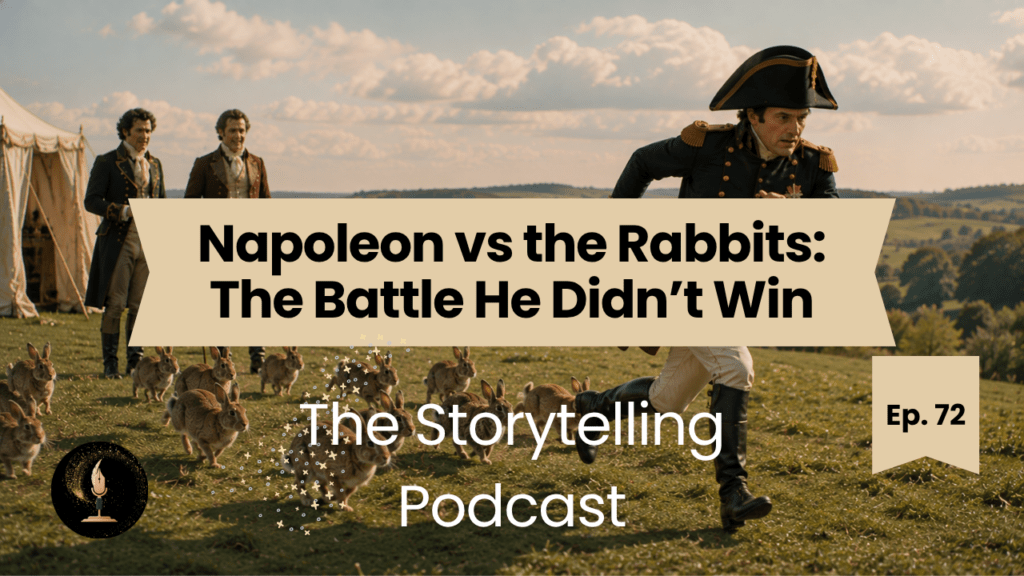
They were rabbits, and instead of running away from Napoleon, they reportedly chased him from the field.
The story of Napoleon’s disastrous rabbit hunt sounds like a scene from a comedy. Although its finer details remain difficult to verify and differ between retellings, it has survived for generations as one of history’s most entertaining anecdotes.
To understand why the story remains so memorable, we first need to meet the man at its centre.
Historical Background
Napoleon Bonaparte was born in Corsica in 1769, shortly after the Mediterranean island became French territory. His family belonged to the minor Corsican nobility, but it was not exceptionally wealthy or politically powerful.
Sent to school in mainland France, the young Napoleon stood apart from many of his classmates. He spoke French with a Corsican accent and devoted much of his time to reading, particularly military history. Museums Victoria’s biographical timeline notes his early education, his Corsican accent and his tendency to spend time alone with books.
The French Revolution transformed his prospects. As the established political and social order collapsed, talented military officers could rise far more rapidly than they might have under the old monarchy. Napoleon distinguished himself during campaigns in Italy and later led the French expedition to Egypt.
By 1799, France was politically unstable and exhausted by years of upheaval. Napoleon participated in the coup of 18 Brumaire and became First Consul. In 1804, he was crowned Emperor of the French at Notre-Dame Cathedral in Paris.
Napoleon’s armies travelled across the continent, winning victories that overturned old alliances and redrew maps. His reputation rested not only on battlefield courage but on organisation, speed and an ability to identify weaknesses before his opponents could react.
At the height of his power, he appeared to be a man capable of controlling almost anything.
Main Story
In June 1807, Napoleon defeated Russian forces at the Battle of Friedland. Soon afterwards, he met Tsar Alexander I on a specially constructed raft in the Niemen River.
The setting was carefully chosen. By meeting in the middle of the river, neither ruler appeared to be entering the other’s territory. The discussions produced the Treaty of Tilsit, signed between France and Russia on 7 July 1807. For Napoleon, it was another moment of triumph.
After years of warfare, a hunt reportedly offered an opportunity to celebrate, relax and spend time with senior officers. Hunting was a familiar aristocratic pastime, combining sport with ceremony, conversation and displays of status. The task of arranging the occasion is usually attributed to Marshal Louis-Alexandre Berthier, Napoleon’s chief of staff and one of his most trusted organisers.
Berthier was no inexperienced assistant. He had managed the complicated movements of armies and served as Napoleon’s right-hand man on campaign. Fondation Napoléon describes him as an able organiser who ran military headquarters with great efficiency. Arranging a rabbit hunt should have been simple by comparison.
Hundreds of rabbits were gathered for the event. The exact number changes depending on who tells the story. Some versions suggest around 300, while others increase the number to 1,000 or even several thousand.
The quantity is less important than the mistake that followed: the rabbits were reportedly domesticated.
Wild rabbits instinctively regard approaching humans as a danger. Once released, they would have been expected to scatter across the countryside, giving Napoleon and his guests something to pursue. Domesticated rabbits had learned a very different lesson. Human beings were not necessarily predators. They were often the people who brought food.
When the cages opened, the assembled hunting party waited for the animals to flee: the rabbits did not cooperate.
They reportedly paused, surveyed the people standing before them, and began moving toward them. A few rabbits became dozens. Dozens became hundreds. Before long, the field appeared to be covered by a moving carpet of animals heading towards the Emperor and his companions.
At first, the scene must have been amusing. These were decorated officers who had faced artillery, cavalry and enemy infantry. Yet waving hats, shouting and attempting to frighten the animals produced little effect. The rabbits continued to gather around Napoleon’s boots.
When he stepped back, they followed, when he changed direction, they followed again.
The animals were not attacking in the usual sense. They were most likely expecting to be fed. Unfortunately, nobody had arrived carrying the meal they anticipated.
Napoleon eventually made for his carriage. Even then, according to versions of the story, the rabbits surrounded the vehicle or continued following it as it departed.
The hunt was over, and the rabbits won.
Watch the Episode
Watch the full episode below
Join Alejandra in the French countryside as Napoleon Bonaparte faces the most unexpected army of his career.
🎥 YouTube Visual Episode: https://youtu.be/XXoe8RFDsCE
🎧 Available on all podcast platforms.
📩 Story submissions:
thestorytellingpodcast80@gmail.com
🌐 Buzzsprout:
https://thestorytellingpodcast.buzzsprout.com
❤️ Support the podcast:
https://www.buzzsprout.com/2443276/support
🌍 Website:
https://alejandraslife.com/
📱 Follow us:
@thestorytellingpodcastofficial
@AleLifeOfficial
▶️ YouTube:
https://www.youtube.com/@AlejandrasLife