
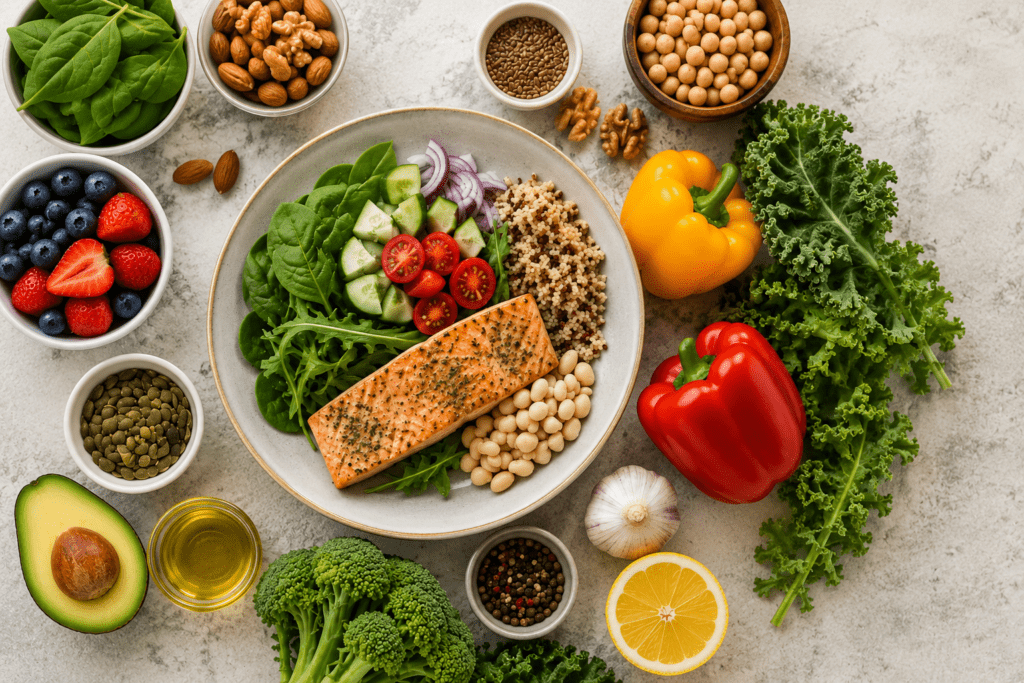
Menopause can bring noticeable changes to energy, appetite, body composition, sleep, and overall wellbeing. As oestrogen levels decline, maintaining muscle, protecting bone health, and supporting cardiovascular health become increasingly important. This is why nutrition during menopause deserves more attention than simply counting calories or trying to find a single food that will “balance hormones.”
There is no specific food or diet that can restore declining oestrogen levels naturally. However, the right eating pattern can support the body through the menopause transition by providing protein, fibre, healthy fats, vitamins, and minerals.
A Mediterranean-style diet is one of the most practical approaches because it focuses on vegetables, fruit, whole grains, legumes, fish, nuts, seeds, and unsaturated fats while limiting highly processed foods and excess saturated fat.
Research suggests that this overall dietary pattern can support cardiometabolic health and may have benefits for some aspects of menopausal health. PubMed: The Mediterranean Diet and Menopausal Health
What Should You Eat During Menopause?
A good menopause diet starts with the quality of the overall eating pattern rather than a strict list of permitted and forbidden foods. Building meals around nutrient-dense foods can help provide sustained energy while supporting muscle, bone, heart, and digestive health.
Protein is particularly important during midlife because maintaining muscle becomes more challenging with age. Include foods such as eggs, Greek yoghurt, fish, chicken, tofu, beans, lentils, and nuts regularly. Combining sufficient protein with resistance exercise can help support muscle strength and function.
Fibre-rich carbohydrates are also valuable. Oats, beans, lentils, vegetables, fruit, wholegrain bread, brown rice, and other whole grains provide carbohydrates alongside fibre and micronutrients. Cutting carbohydrates unnecessarily can make a balanced diet harder to maintain and may reduce an important source of energy.
Healthy fats should have a place in the diet as well. Extra-virgin olive oil, avocado, nuts, seeds, and oily fish provide predominantly unsaturated fats. Oily fish such as salmon, sardines, and mackerel also provide omega-3 fatty acids, making them useful additions to a Mediterranean-style eating pattern.
A systematic review published in 2024 found that Mediterranean diet interventions in menopausal women were associated with improvements in several cardiometabolic measures, including body weight, blood pressure, triglycerides, total cholesterol, and LDL cholesterol. The researchers also noted that more high-quality intervention research is needed.
Key Nutrients for Menopause, Energy and Bone Health
Menopause nutrition is not only about managing weight or symptoms. It is also an opportunity to pay attention to nutrients that become particularly relevant during midlife.
Calcium is important for maintaining bones and teeth, while vitamin D helps the body absorb calcium and contributes to normal bone and muscle function. Dairy products such as milk and yoghurt can provide calcium, while calcium-fortified plant drinks and some tofu products can be useful alternatives. Vitamin D is found naturally in relatively few foods, including oily fish and egg yolks, and is also added to some fortified foods.
In the UK, government guidance recommends that adults consider taking a daily 10-microgram vitamin D supplement during autumn and winter because sunlight is not sufficient for the body to produce enough vitamin D during this period. People who have limited exposure to sunlight may need supplementation throughout the year.
Iron, magnesium, potassium, and folate are also supplied by a varied diet. Rather than relying immediately on supplements, the priority should be a wide range of vegetables, fruit, legumes, whole grains, nuts, seeds, fish, and other nutrient-rich foods. Individual supplementation needs can vary, particularly if someone has a diagnosed deficiency or a medical condition.
Can Diet Help With Menopause Symptoms and Low Energy?
Diet can support health during menopause, but it is important to keep expectations realistic. Persistent fatigue, poor sleep, hot flushes, mood changes, or other symptoms are not necessarily caused by diet alone. Menopause itself, sleep disruption, stress, physical activity levels, medical conditions, and medications can all influence how someone feels.
Some women also notice that particular foods or drinks make certain symptoms worse. Alcohol, caffeine, and spicy foods may trigger hot flushes or other symptoms for some people, although individual responses differ. Keeping a simple food and symptom diary can help identify genuine patterns without unnecessarily eliminating large groups of foods.
It is also worth being cautious about products marketed as “hormone-balancing” foods or supplements. A healthy diet can support the body’s nutritional needs, but it does not replace medical treatment for significant menopause symptoms. Anyone experiencing symptoms that interfere with sleep, work, relationships, or everyday activities should discuss appropriate treatment options with a qualified healthcare professional.
Current evidence increasingly points toward overall dietary quality rather than a single menopause “superfood.” A 2026 review concluded that Mediterranean- and DASH-style dietary patterns have the most consistent evidence for supporting cardiometabolic health, bone health, and muscle health during the menopausal transition, while nutrition-specific effects on hot flushes and other vasomotor symptoms appear more modest and inconsistent.
The Best Menopause Diet Is One You Can Maintain
The most effective menopause diet is not an extreme plan designed to manipulate hormones or produce rapid weight loss. It is a sustainable way of eating that makes nutritious foods the foundation of everyday meals.
Aim to build most meals around vegetables or fruit, a good source of protein, a high-fibre carbohydrate, and a source of unsaturated fat. Combine this approach with regular strength and weight-bearing exercise, adequate sleep, and appropriate medical support when symptoms require it.
Menopause is a significant biological transition, but nutrition can help make this stage of life an opportunity to invest in long-term health. Instead of searching for one food that promises hormone balance, focus on the bigger picture: nourishing the body consistently, protecting muscle and bone, supporting cardiovascular health, and choosing an eating pattern that is realistic enough to follow for years.