
Semiconductors have become one of the most strategically important resources in the global economy. They power smartphones, vehicles, artificial intelligence systems, industrial machinery, telecommunications, and military technology. For decades, the semiconductor supply chain was built around efficiency and specialisation, leading production to become heavily concentrated in a small number of regions.
That model is now under pressure from rising geopolitical tensions, trade restrictions, and concerns about supply chain vulnerability. Governments and corporations increasingly recognise that relying too heavily on a few manufacturing hubs creates serious economic and national security risks. As a result, countries across North America, Europe, and Asia are investing billions into regional semiconductor fabrication plants, or fabs, to reduce dependence on concentrated production networks.
Why Semiconductor Production Became So Concentrated
The semiconductor industry became geographically concentrated because advanced chip manufacturing is extraordinarily expensive and technically demanding. Taiwan emerged as the dominant manufacturing hub largely through the success of Taiwan Semiconductor Manufacturing Company, better known as TSMC.
TSMC pioneered a foundry model focused entirely on manufacturing chips designed by other companies. Over time, Taiwan developed highly specialised engineering expertise, mature supplier ecosystems, and manufacturing efficiencies that were difficult for competitors to match.
Today, Taiwan plays a critical role in global chip production, especially for advanced semiconductors used in artificial intelligence, high-performance computing, and smartphones. That concentration made economic sense during an era shaped primarily by globalisation and cost efficiency.
However, tensions between China, Taiwan, and the United States have transformed semiconductors from a commercial issue into a geopolitical one. Governments increasingly worry that any disruption involving Taiwan could severely impact global industries, including automotive manufacturing, defence systems, and cloud computing infrastructure.
These concerns became more visible during the global chip shortages that followed the pandemic. Production delays affected industries worldwide, exposing how dependent modern economies had become on a fragile and highly concentrated semiconductor supply chain.
The Global Race to Build Regional Fabs
In response, governments have launched major industrial policies aimed at strengthening domestic semiconductor production.
In the United States, the CHIPS and Science Act introduced tens of billions of dollars in subsidies, tax incentives, and research funding to support domestic manufacturing and reduce dependence on East Asian production.
Large semiconductor companies have responded with major expansion projects. TSMC is building manufacturing facilities in Arizona, while Intel, Samsung, Micron, and SK Hynix are also expanding operations in the United States.
Europe has launched similar efforts through the European Chips Act, which aims to improve regional manufacturing capacity and strengthen technological independence. European leaders increasingly view semiconductor production as part of broader economic and strategic security planning.
At the same time, China continues investing heavily in its domestic semiconductor industry as export controls and technology restrictions intensify competition with the United States. Japan and South Korea are also increasing investment to secure long-term manufacturing capabilities.
This global investment wave reflects a major shift in thinking. Governments no longer see semiconductors as just another industrial sector. Chips are now viewed as essential infrastructure tied directly to artificial intelligence, defence systems, telecommunications, and economic competitiveness.
Why Diversification Remains Difficult
Despite the political momentum behind reshoring semiconductor production, diversification is far more complicated than simply building new factories.
Advanced semiconductor fabs require enormous capital investment, highly specialised engineering talent, and access to complex supplier networks. A leading-edge fab can cost tens of billions of dollars and take years to become fully operational.
Even with massive investment, matching the technical maturity and efficiency of existing Asian production networks remains difficult. Taiwan and other East Asian manufacturing centres still benefit from decades of accumulated expertise and deeply integrated supply chains.
The semiconductor industry is also globally interconnected. Chip design may happen in the United States, manufacturing in Taiwan, materials sourcing in Japan, and equipment production in Europe. Building resilience therefore involves restructuring multiple stages of the supply chain rather than relocating a single factory.
Workforce shortages create another obstacle. Countries expanding domestic semiconductor production must also invest heavily in education, engineering talent, and technical training to support long-term industry growth.
From Efficiency to Strategic Resilience
The semiconductor industry is entering a new era shaped as much by geopolitics as economics. For decades, the industry prioritised efficiency, scale, and cost reduction. Today, resilience and strategic security are becoming equally important priorities.
The result is unlikely to be a fully decentralised semiconductor industry. Taiwan and East Asia will remain central to global manufacturing for years to come. However, the ongoing “chip war” is accelerating a long-term restructuring of semiconductor supply chains, where regional manufacturing capacity is increasingly viewed as both an economic safeguard and a geopolitical necessity.
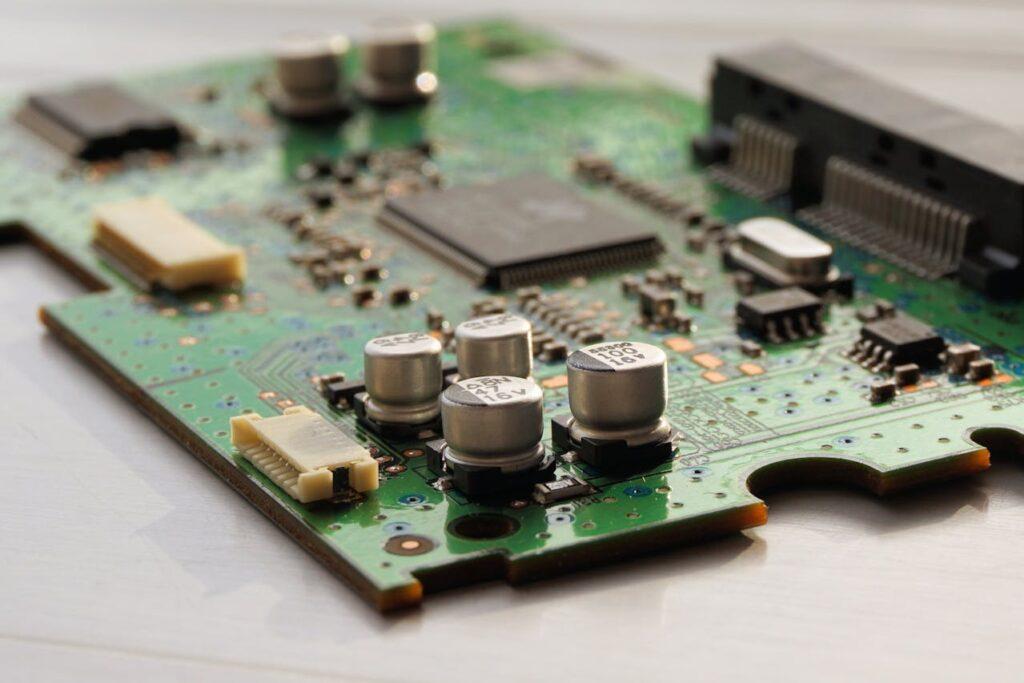
Photo by Pixabay: https://www.pexels.com/photo/close-up-photography-of-computer-motherboard-163125/