
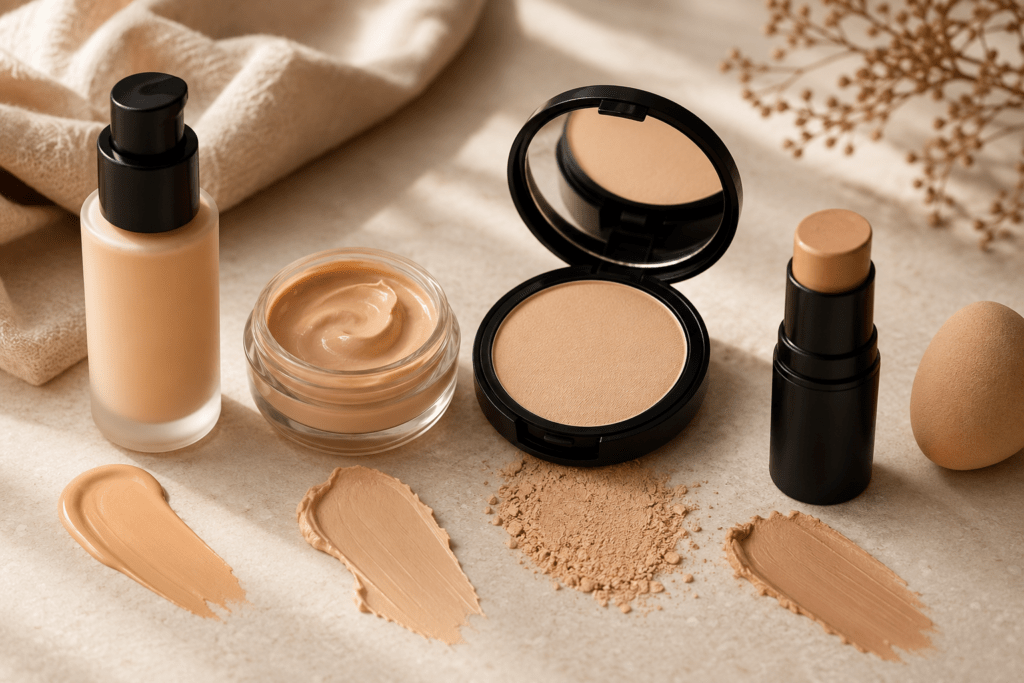
Choosing a foundation often feels more complicated than it should. With liquid, powder, cream, and stick formulas all promising flawless coverage, long-lasting wear, and a natural finish, it is easy to assume that one type is universally better than the others. In reality, the best foundation depends far more on your skin type, lifestyle, and desired finish than on current beauty trends.
Understanding how each formula performs under different conditions can save both time and money. Instead of chasing viral recommendations, it helps to know why certain foundations work exceptionally well for some people while falling short for others. Once you understand the strengths and limitations of each formula, finding your ideal foundation becomes much simpler.
Liquid Foundation: The Most Versatile Choice
Liquid foundation remains the most popular option because it offers the widest range of finishes and levels of coverage. Whether you prefer a lightweight skin-tint effect or full coverage for special occasions, there is usually a liquid formula to meet those needs.
One of its biggest advantages is flexibility. Many liquid foundations blend easily with brushes, sponges, or fingertips, making them suitable for beginners as well as experienced makeup users. They also tend to layer well, allowing you to build coverage only where necessary instead of creating a heavy appearance across the entire face.
Liquid foundations are particularly suitable for normal, dry, and combination skin because many formulas contain hydrating ingredients that help prevent the skin from looking dull or flaky throughout the day. Those with oily skin can also find excellent options by choosing oil-free or matte formulas designed to control excess shine.
The main drawback is that liquid foundations often require proper setting with powder or setting spray if you want extended wear, especially in warm or humid conditions.
Powder, Cream, and Stick Foundations Serve a Different Purpose
Powder foundation is often overlooked, yet it can be one of the easiest products to use for oily or acne-prone skin. Because powders naturally absorb excess oil, they help reduce shine without adding another heavy layer to the complexion. They also allow for quick touch-ups throughout the day, making them a practical choice for people who prefer low-maintenance makeup.
However, powder foundation is generally less forgiving on dry skin. Fine lines, rough texture, or dry patches can become more visible if the skin has not been properly moisturised beforehand.
Cream foundation sits at the opposite end of the spectrum. These formulas typically contain more emollients, creating a richer texture that delivers medium to full coverage while giving the skin a smooth, healthy-looking finish. They work particularly well for mature or dry skin because they provide added moisture and create a more flexible finish than many powders.
Stick foundations have become increasingly popular thanks to their portability and convenience. Their solid format makes application quick, whether you are covering redness, evening out the complexion, or travelling. Many stick formulas also double as concealer or contour products, reducing the number of products needed in a makeup routine.
That convenience comes with some compromises. Because stick foundations are naturally denser, they can feel heavier on very oily skin or require additional blending to avoid a streaky finish.
Finding the Right Formula for Your Skin
Rather than asking which foundation formula is best overall, it is more useful to ask which one matches your individual needs. Dry skin generally benefits from the hydration offered by liquid or cream foundations, while oily skin often performs better with powder or long-wearing matte liquid formulas. Combination skin may require some experimentation, as different areas of the face can benefit from different textures.
Lifestyle also plays an important role. Someone who spends long hours commuting may appreciate the durability and portability of a stick foundation, while someone who enjoys a detailed makeup routine might prefer the customisable finish of a liquid formula. Even the climate can influence performance, with lightweight powders often feeling more comfortable in hot weather and richer creams providing additional comfort during colder months.
There is also no rule that limits you to a single formula. Many professional makeup artists combine products by using liquid foundation as a base, powder to control shine, and stick foundation only where additional coverage is needed. This tailored approach often produces the most natural-looking results because each product is used where it performs best.
The Best Foundation Is the One That Fits Your Routine
The perfect foundation is rarely the one generating the most attention online. Instead, it is the formula that complements your skin, suits your daily routine, and helps you achieve the finish you enjoy wearing.
Liquid foundations offer impressive versatility, powder foundations excel at controlling shine, cream foundations provide hydration and fuller coverage, and stick foundations deliver convenience without sacrificing performance. Understanding these differences allows you to choose products based on how they actually work rather than on marketing claims.
When foundation matches both your skin’s needs and your personal preferences, it becomes easier to achieve makeup that looks natural, feels comfortable, and lasts throughout the day.