
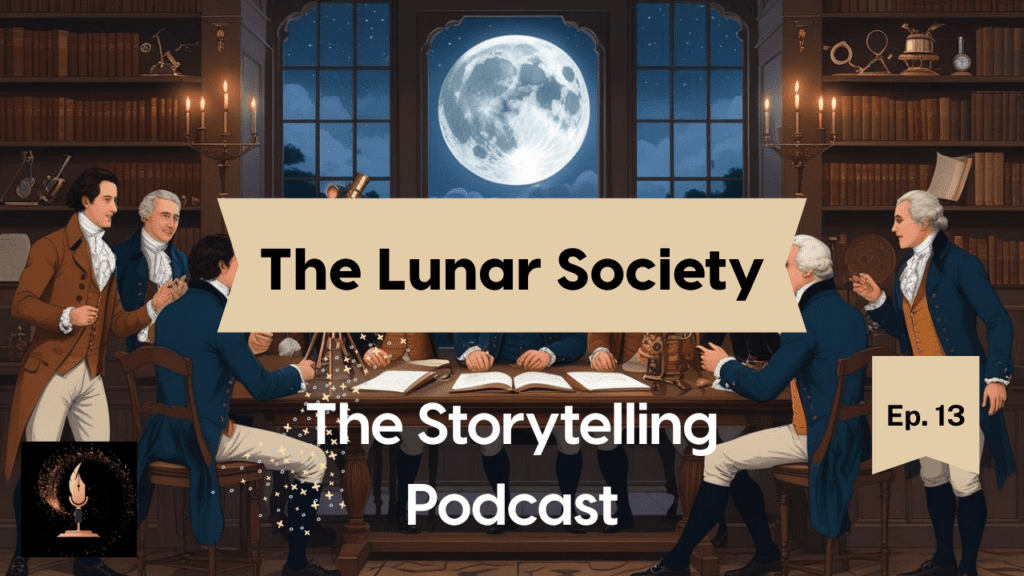
Birmingham’s Enlightenment Thinkers Who Shaped Scientific Innovation and Philosophy
In the late 18th century, Birmingham turned into a magnet for some of the brightest minds of the Enlightenment. The Lunar Society wasn’t just a club of scientists, inventors, and philosophers—it was a sparkplug for ideas that helped launch the Industrial Revolution.
Their conversations and inventions set the stage for changes that would ripple through society and technology.
Matthew Boulton, Josiah Wedgwood, and Erasmus Darwin met up regularly to swap insights and work together on projects. They chatted about everything from electricity to new manufacturing tricks, always pushing at the edges of what folks knew back then.
This society nudged people to rethink science and its place in everyday life. It’s kind of wild to imagine those candlelit meetings, isn’t it?
Origins of the Lunar Society
The Lunar Society started up in the late 1700s, gathering influential minds in Birmingham. These were scientists, inventors, and philosophers who met when the moon was full—something about the glow made their conversations feel more electric.
Formation and Purpose
The Lunar Society got going around 1765. They wanted a place for curious thinkers in the Midlands to meet up.
Members picked the full moon for their monthly meetings so they could travel safely at night. Their focus? Sharing ideas about science, new tech, and philosophy—whatever was on their minds, really.
They’d talk about inventions like the steam engine and new breakthroughs in chemistry. These sessions fired up their creativity and led to some pretty groundbreaking collaborations.
The Lunar Society became a heartbeat of Birmingham’s cultural and intellectual life, shaping what the city would become.
Significance of the Full Moon
The full moon wasn’t just a scheduling trick for the Lunar Society. It made traveling at night a whole lot easier, sure, but there was more to it than that.
For them, the moonlight symbolised enlightenment and the thrill of discovery. The glow felt like a metaphor for shining a light on new ideas. That vibe gave the group its own quirky identity and probably helped fuel their creativity.
Early Members and Influences
The Lunar Society pulled in heavy hitters like Matthew Boulton, James Watt, and Josiah Wedgwood. Boulton was a big name in manufacturing and business. Watt, of course, made the steam engine way more practical—he really changed the game for industry.
Wedgwood was a master potter who shook up ceramics. These folks connected with other provincial philosophical societies, bouncing ideas around and building on each other’s work. Their influence reached well beyond Birmingham, shaping how people everywhere thought about progress.
Birmingham: The Cradle of Enlightenment
Birmingham stood out as a hotspot for new thinking during the Enlightenment. The city’s industrial roots and cultural mix helped nurture fresh ideas.
It drew in people who wanted to shake things up and make society better. There was something in the air—maybe the steam, maybe the ambition.
Why Birmingham Became a Hub
Birmingham exploded in the 18th century, thanks to its booming industry. The town churned out metal goods, tools, and jewellery—basically, it made stuff people wanted.
This industrial buzz attracted thinkers eager to debate and upend old ways. The new canals and railways made it easier for people to get together and swap ideas.
Inventors and philosophers could meet face-to-face, which led to some lively discussions. Those connections sparked inventions and social changes that still echo today.
Industrial and Cultural Context
Birmingham sat right at the heart of the Industrial Revolution. Factories and workshops replaced handcrafts with machines, which opened up new jobs and grew the middle class.
People started to value education and progress more. The city had a lively mix of artisans, workers, and folks who’d spent time in books.
This melting pot made it easy for ideas to bounce around. Gatherings like the Lunar Society became places where science, philosophy, and tech all got their turn in the spotlight.
Role of the Midlands in Enlightenment Thought
The Midlands—and Birmingham especially—played a huge part in the Enlightenment. Figures like Matthew Boulton and Josiah Wedgwood didn’t just build businesses; they talked about natural rights, democracy, and how to make society fairer.
Nearby spots like Dudley and Staffordshire added to the buzz. The thinkers here loved to challenge each other and dig deep, setting the stage for a wave of scientific and social breakthroughs.
Key Members and Their Contributions
The Lunar Society’s roster read like a who’s who of the era. Their ideas and inventions left marks on science, industry, and the arts that still matter.
Matthew Boulton’s Innovations
Matthew Boulton helped kickstart the Industrial Revolution. He co-founded Boulton & Watt, building steam engines that made factories hum.
Boulton also shook up coin minting by using machines, making currency more reliable. He pushed for better manufacturing methods, always looking for ways to improve how things got made.
His knack for blending science with business inspired a lot of folks around him. Boulton’s efforts changed how Britain worked and traded.
James Watt and the Steam Engine
James Watt’s name is pretty much synonymous with the steam engine. He made engines more efficient and less thirsty for fuel, which opened up new uses in mining and manufacturing.
Watt even came up with the concept of horsepower, giving people a new way to measure engine power. His partnership with Boulton made these engines widely available.
Watt’s work set the foundation for modern engineering and changed how people thought about energy. It really was a turning point.
Erasmus Darwin: Science and Medicine
Erasmus Darwin wore a lot of hats—physician, poet, and natural philosopher. He wrote about evolution and botany, tossing out ideas that would later influence his grandson, Charles Darwin.
In medicine, Erasmus pushed for new ways of thinking about health and healing. He believed in observation and experimentation, which helped shape early science.
He loved cultivating gardens and showing off plant diversity. His writing made science more popular and encouraged others to poke around in the natural world.
Josiah Wedgwood and the Arts
Josiah Wedgwood built a pottery empire and changed how ceramics were made. He started the Wedgwood Company, making fine pottery available to more people.
Wedgwood mixed art and science, always experimenting with new clays and glazes. His designs, often with neoclassical flair, set trends in both art and consumer goods.
He was also ahead of his time in marketing. Wedgwood’s work left a big mark on pottery and artistic culture in Britain.
Other Prominent Figures
Other Lunar Society members made big strides in science, medicine, and philosophy. Each brought something unique to the table, helping push knowledge forward.
Joseph Priestley and Chemistry
Joseph Priestley made waves in chemistry, especially for discovering oxygen back in 1774. He ran all sorts of gas experiments, changing how people understood air.
Priestley invented a way to collect gases for experiments, which was a game-changer. He didn’t just stick to science—he also dabbled in philosophy and religion, making him a bit of a Renaissance man.
William Withering’s Medical Discoveries
William Withering was a doctor and botanist who dug deep into the uses of digitalis from the foxglove plant. In the late 1700s, he published a book showing how digitalis could treat heart failure.
Withering relied on careful observation and clinical trials, bridging the gap between folk remedies and science. His work marked a leap forward in medicine and helped doctors better understand heart conditions.
Samuel Galton and the Galton Family
Samuel Galton, another Lunar Society standout, worked in iron and bristle manufacturing. He contributed to Birmingham’s economy while geeking out over science and philosophy.
The Galton family became known for their intellectual pursuits. Samuel Galton, Jr. carried on the tradition, helping build a culture of curiosity and experimentation.
James Keir and William Small
James Keir, a chemist and manufacturer, liked to keep science practical. He patented the first British soap and helped drive industrial progress.
William Small, an educator and philosopher, fostered a space for fresh ideas within the Lunar Society. He believed in the power of education and encouraged others to think big. Together, Keir and Small helped the scientific community thrive.
Groundbreaking Scientific Achievements
The Lunar Society sat at the center of a whirlwind of scientific breakthroughs. Members teamed up on inventions and experiments that changed engineering, medicine, and how people understood the world.
Advancements in Engineering and Invention
Lunar Society members made big leaps in engineering. James Watt, for instance, reimagined the steam engine, making it more efficient and practical.
These improved engines powered factories and trains, transforming transportation. Matthew Boulton and others helped build and spread these innovations, fueling economic growth.
The group loved to mix ideas from chemistry and mechanics, always hunting for the next big thing. Their approach encouraged a kind of creative cross-pollination.
Experiments with Electricity and Gas Light
Electricity was a hot topic for the Lunar Society crowd. Joseph Priestley led the charge in studying gases, discovering oxygen and carbon dioxide along the way.
Gas lighting, another game-changer, started lighting up city streets and homes. The society’s input helped make evenings safer and, let’s be honest, a bit more fun.
Medical and Botanical Breakthroughs
The Lunar Society didn’t ignore medicine or plants. They looked for new treatments and explored how plants could help heal, like using digitalis for heart disease.
Members dabbled in meteorology and geology too, trying to figure out weather and the earth’s structure. Their curiosity laid groundwork for future science and even helped improve farming and health. A lot of their achievements ended up in science museum collections, still inspiring people today.
Philosophical and Social Impact
The Lunar Society pushed new ideas during the Enlightenment. Its members dove into debates about science, philosophy, and how society could change for the better.
Ideas that Shaped the Enlightenment
Folks like Josiah Wedgwood and Erasmus Darwin championed reason, logic, and observation. They debated human rights, education, and why scientific discovery mattered.
The society encouraged people to value independent thinking and reason—core Enlightenment values. By challenging old beliefs, they helped kick off a wave of innovation and progress. Isn’t it fascinating how a few good conversations can change everything?
Connections to the French Revolution
The ideas exchanged among Lunar Society members influenced thinkers who later inspired the French Revolution. The society’s discussions about liberty, equality, and fraternity really struck a chord back then.
British and French Enlightenment thinkers kept up a lively correspondence, helping revolutionary ideas cross borders. Through their scientific and philosophical works, Lunar Society members challenged authority and pushed for democracy.
Influence on Social Reform and Industry
The Lunar Society left its mark on both social reform and the Industrial Revolution. Their scientific breakthroughs improved manufacturing techniques, leading to higher productivity and big economic shifts.
James Watt, for instance, changed the game with steam power and pushed industry forward. These advances created new jobs and changed daily life in ways people couldn’t have predicted.
Members pushed for reforms in education, labor rights, and city planning. Their teamwork built networks that kept innovation rolling, shaping how we make things even now.
Collaborations and Partnerships
The Lunar Society thrived on collaborations between leading minds in science, industry, and the arts. Their partnerships led to major leaps in technology and culture.
They didn’t limit themselves to local connections—these folks reached out to other big thinkers, both nearby and abroad.
Boulton & Watt: Industrial Pioneers
Matthew Boulton and James Watt teamed up to transform the steam engine. Boulton ran the Soho Manufactory, where they built engines that powered factories all over.
Watt made steam engines more efficient, which played a huge role in industry. Their work opened doors to new ways to transport goods and sparked a wave of new machines.
Their partnership set the stage for modern industry—no exaggeration there.
Wedgwood and Etruria
Josiah Wedgwood made a name for himself with innovative pottery designs. He set up the Etruria factory near Birmingham, focusing on top-notch ceramics.
Wedgwood didn’t just make pottery—he shook up marketing and production too. He used the Trent and Mersey Canal to ship goods, connecting Etruria to wider markets.
His attention to quality and design set new standards that still echo in pottery today.
Transatlantic Connections
The Lunar Society reached beyond Britain, forging ties with folks like Benjamin Franklin and Thomas Jefferson. These connections sparked a back-and-forth of ideas and technology.
Franklin, always the science buff, admired the Society’s inventions. Jefferson, a fan of innovation, swapped letters with members about everything from farming to manufacturing.
These relationships helped spread the enlightenment vibe across the Atlantic.
Venues and Meeting Places
The Lunar Society met all over Birmingham. These spots became backdrops for conversations that nudged science, industry, and philosophy forward.
Soho House and Great Barr Hall hosted many of their gatherings, creating an atmosphere that really encouraged new ideas.
Soho House and Great Barr Hall
Soho House, built by Matthew Boulton, stood out as a central meeting spot. Its elegant rooms inspired lively discussions and even hands-on workshops.
Great Barr Hall also played a big role, especially for larger groups. The spacious setting made it easy for members to collaborate and debate, drawing in names like Josiah Wedgwood and James Watt.
The Workshop Atmosphere
Birmingham’s workshops fueled much of the Society’s work. Boulton’s workshop, in particular, focused on manufacturing and engineering.
This hands-on environment let members tinker with inventions directly. Other industrial sites also hosted meetings, giving everyone a front-row seat to new tech and fresh ideas.
Honestly, these practical settings were the real engine behind their scientific progress.
Other Notable Sites in Birmingham
Birmingham had its share of other notable venues. Aston Hall, an old and storied building, set the stage for many Society conversations.
St Mary’s Church in Handsworth also brought the group closer to the community. The Library of Birmingham and local museums keep their legacy alive, preserving artefacts and documents from the Society’s heyday.
These places now showcase the Lunar Society’s role in the Age of Enlightenment.
The Wider Legacy of the Lunar Society
The Lunar Society made a real impact across science, industry, and culture. Their bold ideas and teamwork set the stage for changes we still feel today.
Influence on Modern Science and Industry
Lunar Society members led the charge during the Industrial Revolution. They pushed science and technology by focusing on what worked in the real world.
People like Josiah Wedgwood and Matthew Boulton took pottery and manufacturing to new heights. Their steam power experiments and metalworking skills paved the way for future breakthroughs.
This network of inventors and scientists made machinery better and inspired the belief that sharing knowledge drives progress.
Cultural and Educational Impact
The Society’s influence wasn’t just about science or industry. They championed education and intellectual exchange, shaping Birmingham’s cultural scene.
Founding libraries and museums showed their commitment to learning. Erasmus Darwin’s writings fired up new thinkers, encouraging more people—including women—to join the conversation.
This shift helped create a more open, welcoming environment for future scholars.
Preservation and Public Memory
Today, the Lunar Society’s legacy sticks around in a bunch of ways. The Library of Birmingham and local museums show off collections that celebrate their achievements.
The Science Museum highlights inventions from their era. Erasmus Darwin House stands as a reminder of their influence.
Events, exhibitions, and educational programs help keep their story alive. Joseph Chamberlain’s work later on really underscored just how much the Lunar Society’s ideas still matter.
Challenges, Controversies, and Decline
The Lunar Society ran into plenty of bumps along the way, including controversial ideas that set off public outrage. They also struggled with diversity and inclusion, especially when it came to women’s roles.
As membership changed, the original spark started to fade.
Controversial Ideas and the Priestley Riots
Joseph Priestley, a major player in the group, pushed radical political and scientific ideas. Supporting both the American and French revolutions, he made friends and enemies alike.
Tensions boiled over during the 1791 Priestley Riots in Birmingham. Angry crowds went after Priestley’s home and the Unitarian Church, seeing his views as a threat.
The riots really exposed the rift between Enlightenment thinkers and the more conservative crowd.
Diversity, Inclusion, and the Role of Women
The Society mostly included men, which limited women’s involvement and narrowed their perspective. Women like Mary Shelley contributed indirectly, showing the value of more voices in the mix.
Some men recognized women’s input, but leadership roles for women were rare. This reflected the era’s broader attitudes about gender.
Leaving women out meant missing out on fresh ideas and potential growth. If only they’d been more open, who knows what else they could have achieved?
Membership Changes and Final Years
As the Industrial Revolution rolled on, many founding members grew older or passed away. New faces showed up, but honestly, some just didn’t share the same spark or drive.
The Society started drifting away from its roots. People got more focused on their own projects than on working together.
By the early 19th century, interest in the Society really started to wane. The network that once shaped so much couldn’t quite keep up with all the social and economic shifts happening around it.
By the 1820s, the Lunar Society had mostly faded from view. That was pretty much the closing chapter for a remarkable era in Birmingham’s intellectual scene.