
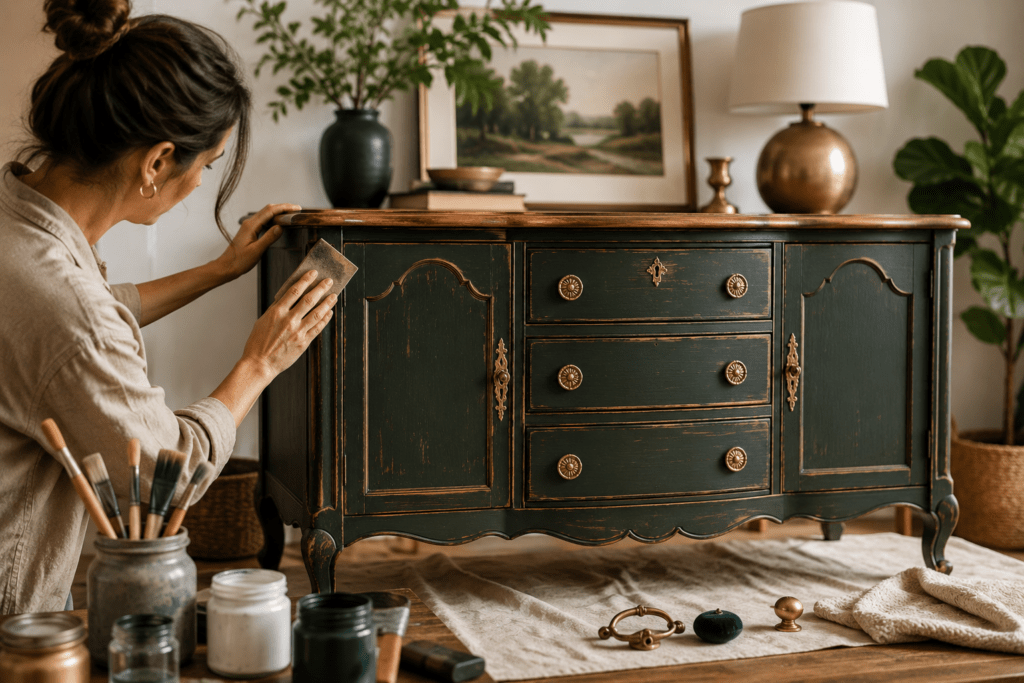
Luxury interiors are often associated with custom furniture and premium price tags, but creating a sophisticated home does not always require buying new pieces. Vintage furniture offers a unique opportunity to combine timeless craftsmanship with modern design, allowing homeowners to create distinctive interiors while embracing a more sustainable approach to decorating.
The difference between a dated second-hand piece and a statement feature often comes down to thoughtful restoration rather than extensive renovation. By understanding how to prepare surfaces, choose the right finishes, and update hardware, even an overlooked cabinet or worn dresser can become a focal point that rivals designer furniture.
Restoration Creates the Foundation for a Professional Finish
The success of any furniture upcycling project begins long before the first coat of paint is applied. Proper preparation determines how well the finished piece will look and how long it will last.
Start by assessing the furniture’s condition. Solid wood furniture is generally an excellent candidate for restoration because it can withstand sanding, repairs, and refinishing multiple times throughout its lifespan. Inspect for loose joints, damaged veneer, scratches, and water marks before deciding which restoration methods are required.
Cleaning is an essential first step that is often underestimated. Years of dust, polish, wax, and grease can prevent paint or stain from adhering correctly. A thorough clean with an appropriate degreasing solution creates a better surface for every stage that follows.
Minor repairs should also be completed before refinishing begins. Filling small dents, tightening joints, replacing damaged wood filler, and lightly sanding rough areas help create smooth, even surfaces that produce a more refined result. Taking the time to prepare the furniture properly reduces imperfections that become more noticeable once paint or stain is applied.
Paint Selection and Finishing Techniques Elevate the Design
Colour has one of the greatest influences on whether an upcycled piece feels handcrafted or professionally designed. Neutral shades such as warm white, charcoal, taupe, olive green, and deep navy continue to complement a wide variety of interior styles while giving vintage furniture a contemporary appearance.
Equally important is selecting the right type of paint. Chalk paint is popular because it adheres well to many surfaces and creates a soft, matte finish with minimal preparation. Mineral paint offers similar benefits while providing excellent durability, whereas furniture enamel delivers a smoother finish that works particularly well for modern interiors.
Application technique matters just as much as colour selection. Multiple thin coats generally produce a cleaner and more durable finish than one thick application. High-quality synthetic brushes or foam rollers help minimise brush marks, while light sanding between coats creates an exceptionally smooth surface.
For homeowners who prefer to showcase the natural beauty of timber, stripping old finishes and applying wood stain followed by a clear protective topcoat can highlight original grain patterns while giving the furniture a refreshed appearance. This approach works especially well with oak, walnut, and other hardwoods known for their distinctive character.
Protective finishes should never be overlooked. Wax can provide a soft, traditional appearance, while polyurethane or water-based sealers offer greater resistance to scratches, moisture, and everyday wear in high-use areas.
Small Details Often Create the Most Luxurious Results
Many vintage furniture transformations are defined not by dramatic changes but by carefully considered finishing touches. Hardware, in particular, has a significant impact on the overall aesthetic.
Replacing outdated handles and drawer pulls with modern brass, matte black, brushed nickel, or antique bronze hardware can instantly refresh a piece without altering its original structure. The chosen finish should complement the surrounding décor while remaining proportionate to the furniture itself.
Styling also contributes to the final impression. A restored sideboard paired with carefully selected lighting, artwork, ceramics, or decorative books appears far more intentional than the furniture displayed in isolation. These surrounding elements help integrate the piece naturally into the room rather than making it feel like a standalone restoration project.
Mixing old and new materials further enhances the sense of luxury. A vintage cabinet beneath contemporary artwork or an antique console styled with modern accessories creates visual contrast that gives interiors greater depth and personality. This layered approach is one reason professionally designed spaces often feel more inviting than rooms filled exclusively with brand-new furniture.
Most importantly, avoid over-restoring pieces that possess distinctive craftsmanship or architectural details. Preserving carved mouldings, original wood grain, or subtle signs of age often adds authenticity that cannot be replicated with new furniture.
Sustainable Design Without Compromising Style
Upcycling vintage furniture demonstrates that exceptional interior design is driven more by thoughtful choices than by expensive purchases. Well-made older furniture often offers superior craftsmanship, solid construction, and unique character that many mass-produced alternatives struggle to match.
By investing time in careful restoration, selecting finishes that suit the surrounding space, and upgrading hardware with intention, second-hand furniture can become elegant focal points that elevate an entire room. Beyond the aesthetic benefits, this approach also extends the lifespan of quality furniture and reduces unnecessary waste, making it a practical choice for homeowners who value both sustainability and timeless design.
Rather than viewing vintage furniture as outdated, it is worth recognising its potential. With the right techniques, yesterday’s forgotten pieces can become the standout features of today’s most sophisticated interiors.