
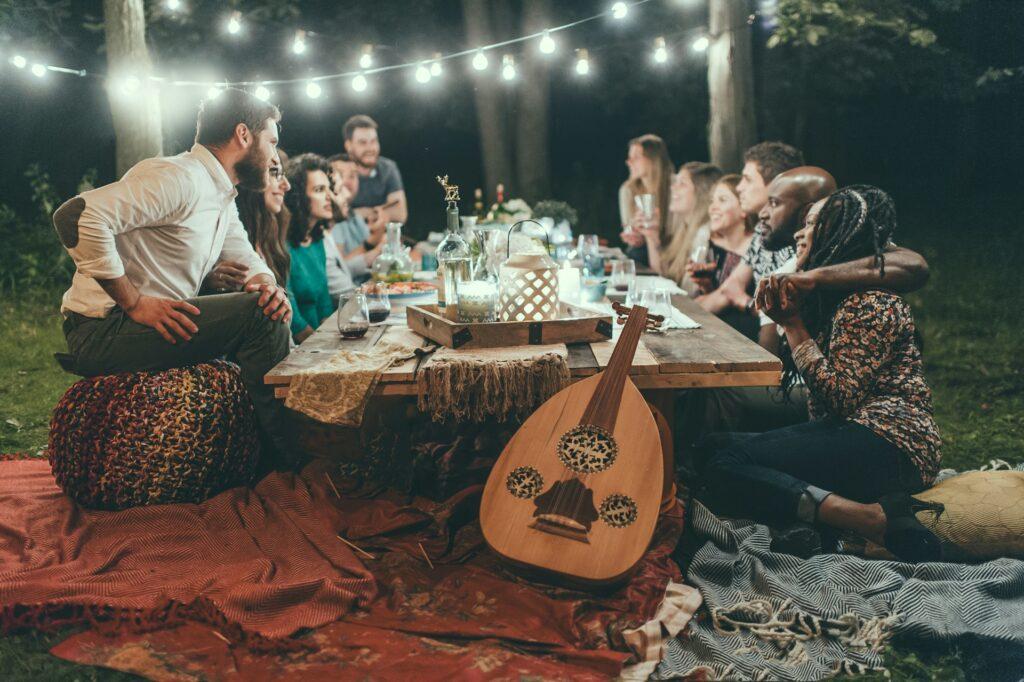
A backyard dinner feels more relaxed when the practical details have been sorted before anyone arrives. Stable tables, comfortable seating and enough light can turn an ordinary lawn into a welcoming place to share a meal.
If this is your first outdoor dinner party, start with a manageable guest list of six to eight people and plan the space around how they’ll eat, talk and move around.
The setup doesn’t need to look formal. A clear theme and a few thoughtful choices will make the whole evening feel connected.
Crafting a Cohesive Dining Theme
Choose one simple idea to guide your tableware, linens and flowers. A Mediterranean-style meal might suit striped napkins, terracotta pots and bowls of herbs, while a relaxed garden theme could feature mismatched plates and seasonal flowers in small jars.
Limit your color palette to two main shades plus natural materials such as wood or stone. This keeps the table interesting without making it look crowded. Use items you already own before buying decorations. A cotton throw can become a tablecloth and potted plants can double as centerpieces.
Let the menu support the theme too. Shared platters encourage conversation and reduce the number of trips between the kitchen and backyard.
Establishing Solid Footing Across Uneven Lawns
Walk across the dining area several days before the party and check for dips, soft patches or exposed roots. Place the table on the flattest section, then press down gently on each corner to spot any wobble. Wide furniture feet or sturdy outdoor pads can help distribute weight without sinking into the grass.
Avoid trying to balance table legs with folded cardboard, which can soften if the ground is damp. A solid wooden wedge is safer and easier to adjust.
Keep the main route from the house clear and well lit. If rain is expected, move the dining setup onto a patio or another firm surface so guests aren’t carrying plates across slippery grass.
Choosing Decorative Aggregates for High Traffic
A frequently used path between the house and dining area needs a surface that can cope with regular foot traffic. Gravel and stone chippings can define the route while reducing muddy patches around tables, planters and serving stations. Browse decorative aggregates with the surrounding garden colors and intended use in mind.
Choose pieces that are comfortable to walk on and suitable for the depth of the planned area. Install edging to keep loose material away from the lawn, then prepare and compact the base before spreading the top layer. A permeable surface may also support rainwater management by allowing water to filter through instead of collecting along a busy route.
Creative Seating for Intimate Crowds
Give every guest a proper seat with enough room to eat comfortably. Dining chairs can be mixed with sturdy benches, outdoor armchairs or flat-topped storage boxes designed to support an adult’s weight. Add washable cushions in coordinating colors to bring mismatched pieces together. Outdoor seating arrangements can make even a modest backyard more versatile.
Allow around 24 inches of table edge per person and leave a clear route behind the chairs. Guests should be able to stand up without bumping into planters or stepping into serving areas.
For a group of eight, one long table often creates an easier flow than several small tables. Place quieter seats away from speakers and keep at least one chair on firm, level ground for anyone who may find a soft lawn difficult.
Curating the Playlist and Lighting
Build a playlist that lasts longer than the planned meal so you don’t have to manage it midway through dessert. Start with bright, familiar music as guests arrive, then switch to softer tracks during dinner. Keep the speaker close enough to hear but far enough away that conversation remains easy.
Use several low-level light sources instead of one harsh fixture. Battery-powered table lamps, enclosed lanterns and outdoor string lights create a warm glow while helping guests see steps and paths. Check that every product is rated for outdoor use and position cables away from walking routes.
Set up the lights before sunset. You’ll quickly notice dark corners, glare over the table or a path that needs one more lantern.
Finish the preparations a few hours before guests arrive, then sit in one of the dining chairs and view the backyard from their perspective. If you can reach your glass, hear the music and see the route indoors without shifting furniture, the space is ready for dinner.
Photo by Considerate Agency on Unsplash