Generative artificial intelligence has rapidly transformed creative production. Text-to-image and text-to-video models can now generate illustrations, animations, marketing visuals, and written content within seconds. For businesses, the appeal is clear. AI tools reduce production costs, accelerate workflows, and make large-scale content creation more accessible.
At the same time, these technologies have created major legal and ethical concerns across creative industries. Artists, filmmakers, writers, and designers increasingly question whether AI systems rely on copyrighted material without permission and whether machine-generated content threatens the economic value of human creativity. The debate now extends far beyond technology companies and legal experts. It is becoming a defining issue for the future of creative work itself.
How Generative AI Challenges Copyright Law
Modern generative AI models are trained on massive datasets collected from the internet, including photographs, films, illustrations, and written works. Developers often argue that using publicly available material for training falls under fair use or similar legal principles because the systems analyse patterns rather than store direct copies.
Critics strongly dispute this position. Many artists and publishers argue that their work has been used commercially without consent, compensation, or attribution. Several lawsuits involving AI companies focus on whether training models on copyrighted content constitutes infringement, particularly when generated outputs closely resemble existing artistic styles or imagery.
The issue becomes more complicated because copyright law was designed around human authorship. Traditional frameworks assume a creator exercises direct control over a finished work. Generative AI blurs this distinction. A user may provide a text prompt, but the system itself determines composition, style, and interpretation based on patterns learned from large datasets.
This creates uncertainty around ownership. In many jurisdictions, copyright protection requires meaningful human involvement. Purely AI-generated content may therefore struggle to qualify for legal protection, creating commercial risks for businesses using AI-generated media.
Another growing concern involves artistic style replication. Copyright generally protects specific works rather than visual styles, but generative AI can reproduce aesthetics strongly associated with individual artists. Even if courts ultimately determine that style imitation is legal, many creators argue that the practice remains ethically problematic.
The Economic Impact on Human Creators
Beyond copyright disputes, generative AI is reshaping the economics of creative industries. Tasks that once required illustrators, editors, animators, or concept artists can increasingly be completed with AI-assisted workflows. Advertising agencies, publishing companies, and media platforms now use AI-generated assets to reduce costs and accelerate production.
For independent creators, this shift creates significant competitive pressure. Freelance marketplaces and stock image platforms are already experiencing saturation from AI-generated content. Clients who previously hired artists for smaller commercial projects may now rely on low-cost AI alternatives instead.
The deeper concern is that many AI systems derive their capabilities from human-created work while offering little or no compensation to the original creators. Critics argue that this transfers economic value away from artists and toward technology companies that monetise large-scale automation.
Supporters of generative AI argue that technological disruption has always changed creative industries. Digital photography transformed traditional film, while streaming reshaped music distribution. From this perspective, AI is viewed as another productivity tool that may eventually create new forms of creative work.
However, the speed and scale of AI development distinguish it from previous technological changes. A single AI system can generate thousands of images or videos within hours, dramatically increasing content supply while reducing demand for some forms of human labour.
Rethinking Originality in the AI Era
The debate surrounding generative AI ultimately challenges cultural ideas about originality itself. Human creativity has always involved influence, adaptation, and reinterpretation. Artists learn from existing work and develop styles shaped by broader cultural references.
Generative AI complicates this process because its outputs are built through statistical analysis of millions of existing works. While supporters argue this resembles human learning, critics maintain that machine-generated synthesis lacks personal experience, intention, and artistic identity.
As governments and courts continue evaluating AI copyright disputes, legal frameworks will likely evolve toward greater transparency around training data and licensing practices. The long-term challenge will be balancing technological innovation with meaningful protection for the creators whose work helped build these systems.
The future of creative industries may therefore depend not only on what AI can generate, but also on how society chooses to value authorship, originality, and human creative labour in an increasingly automated economy.
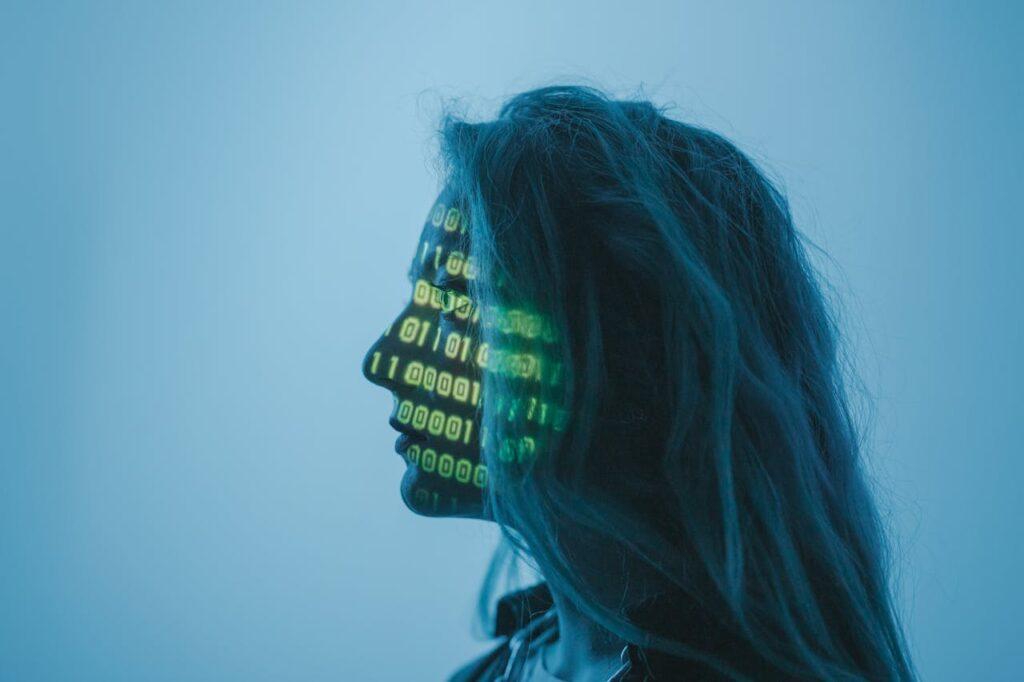
Photo by cottonbro studio: https://www.pexels.com/photo/a-woman-with-number-code-on-her-face-while-looking-afar-5473956/