
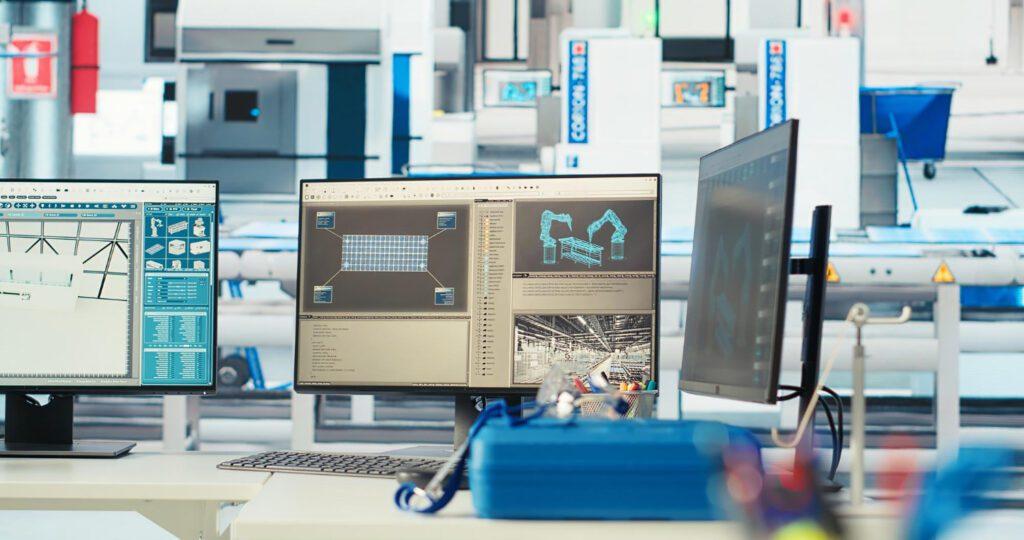
Edge computing is reshaping how industrial systems operate, think, and respond. Instead of routing every decision through distant cloud servers, it processes data locally, at the machine, on the floor, or right beside the sensor. That shift reduces latency, improves control, and makes systems more resilient. For industries where milliseconds matter, this isn’t just efficient, it’s transformative.
Whether you’re managing factory lines or automating logistics, edge computing unlocks speed and autonomy previously out of reach. It’s not the future, it’s happening now.
What Is Industrial Edge Computing
Edge computing brings data processing physically closer to the source of events — unlike the cloud, which centralizes decision-making. In factories, that means embedded systems analyzing sensor input and triggering real-time actions without delay. This matters in fast-moving environments where centralized lag leads to losses. It also reduces bandwidth strain by filtering noise before data hits the network. Think of it as adding a local brain to every limb of your operation. When the edge thinks fast, the whole system gets sharper.
Predictive Maintenance Applications
Edge computing enables real-time monitoring of equipment health, catching failures before they cascade. Sensors collect vibration, pressure, or temperature data — and edge devices analyze it on-site. When anomalies surface, alerts trigger instantly, not minutes later. That means fewer surprise breakdowns, less downtime, and lower maintenance costs. It also lightens the load on IT infrastructure by discarding irrelevant data early. Smart edge systems know what matters and what doesn’t.
Robotics & Motion Control at the Edge
Industrial robots need precision, and edge computing delivers the timing they demand. Rather than waiting on remote commands, robots process motion logic and feedback locally. This reduces lag, enhances safety, and allows for smoother, adaptive movement. Even in environments with shaky connectivity, edge-powered robots keep operating. For manufacturers scaling automation, that reliability is non-negotiable. Local processing equals local control.
Machine Vision in Manufacturing
Edge computing strengthens machine vision by enabling real-time image analysis directly at the source. This eliminates the delays caused by sending video feeds to the cloud and waiting for decisions. Systems can inspect, sort, and react within milliseconds — essential for high-speed production lines. It also ensures that sensitive data never leaves the premises. Successful machine vision use in manufacturing depends on rugged, industrial-grade computing that performs reliably under harsh conditions while delivering immediate insights. Without edge, the vision stays blurry.
Energy & Sustainability Optimization
Factories waste energy when decisions are slow or blind — edge systems fix that. By monitoring power use and system loads in real time, they optimize operations on the fly. That could mean shifting energy-hungry tasks to off-peak hours or shutting down idle equipment. These micro-adjustments add up to measurable savings. More importantly, they reduce environmental impact without sacrificing performance. Smarter energy decisions start at the edge.
Autonomous Operations & Industrial Robots
Edge computing supports semi- and fully-autonomous machines by allowing decisions to happen instantly, on-site. In complex industrial settings, that means machines that can adjust, reroute, or self-correct without human intervention. These systems operate fluidly, reacting to real-time inputs instead of static instructions. The edge becomes both sensor and supervisor. As autonomy grows, so does the need for local intelligence. Cloud alone can’t keep up — the edge keeps things moving.
Network Resilience & Fault Tolerance
No network is perfect — but edge computing builds resilience into the system. When cloud services drop or latency spikes, edge devices keep critical processes running. That’s essential for plants in remote areas or during unexpected outages. It also adds a layer of cybersecurity by minimizing data exposure. By decentralizing operations, you reduce single points of failure. The result: fewer disruptions, more control.
Edge computing isn’t just a technical upgrade — it’s a strategic shift. It decentralizes decision-making, shortens feedback loops, and makes industrial systems more intelligent and responsive. Whether you’re automating processes, reducing energy waste, or avoiding downtime, the edge is where meaningful control begins. It creates a buffer against network fragility while unlocking local speed. The future of industrial operations isn’t in some distant server — it’s built into the machine itself. And it’s already transforming how we work.
Discover a world of insights and inspiration at Alejandra’s Life. Dive in and transform your lifestyle today!
Post by Megan Cooper
Image credit: https://www.freepik.com/free-photo/simulation-software-computer-monitor-empty-solar-panels-plant_416930602.htm